

Why do some people look for cupping when conception is delayed?
When conception is delayed, advice can come from every direction. A friend mentions an experience she heard about, an account on social media suggests specific sessions, and a relative reassures you that it is only a matter of time. It is natural to look for a step you can start now, especially if the wait has been long. But the question that helps you more is: does this step give me information about the cause of the delay, or increase the chance of pregnancy with reliable evidence? So far, there is no high-quality clinical evidence showing that cupping treats delayed conception or increases the chance of a live birth. So do not postpone a fertility assessment appointment in order to try it first.
If you read about someone who conceived after a session, remember that the sequence of events alone does not tell us why the result happened. Pregnancy may occur during the waiting period for an appointment, or alongside another treatment, or in a later cycle of trying. This does not diminish the person's joy in their experience. But it means their experience does not answer the question that matters to you: what would the chance of the result have been if the session had not been done at all? That question needs a study that compares similar groups and follows the outcomes that matter to patients.
When should you book a fertility assessment?
The American Society for Reproductive Medicine generally recommends starting assessment after 12 months of regular unprotected intercourse when the woman is under 35, and after 6 months if she is 35 or older, when there is no known factor that may affect fertility in either partner. After age 40, a faster assessment may be needed. These are guidance times for starting the medical discussion, and the decision changes according to health history and situation.
Contact a doctor earlier if your period is absent or irregular, or if there is a known or suspected factor that may affect fertility, such as endometriosis or a known problem in the husband. Surgical history or some previous treatments may also affect the timing of consultation. When booking, you can say: “We have been trying for [so long], and we have this information in our health history. Do we need an appointment now?” This question helps more than trying to apply the timeframes to every case in the same way. And if you are unsure when you started trying, give your estimate and what you know instead of postponing the question until all the details are complete.
What does the first appointment with the doctor look like?
The visit usually begins with a discussion of how long you have been trying, the regularity of the cycle, medical and surgical history and medications, and any previous assessment. The assessment may include looking at ovulation regularity, the condition of the uterus and fallopian tubes when needed, and a semen analysis for the husband. This is not a list the doctor requests for everyone on the same day. They choose what suits the health history and explain the order of tests and what may change in the plan according to the results. It is useful to start assessing both partners in parallel when appropriate, instead of waiting for all of one partner's tests to be completed before looking at the other partner's history.
Before the appointment, gather previous test results and their dates, and write down the names of the medications and supplements that you or your husband use. If you have had a consultation before, note what you understood from it and what remained unanswered. A practical question at the end of the visit is: “What is the first step, who arranges it, and when do we review the result with you?” Ask the doctor to explain abbreviations or numbers you did not understand. You do not need to leave with all the answers at the first visit, but knowing the order of steps helps reduce confusion between appointments.
How do you distinguish a marketing claim from a useful result?
An advertisement may say that cupping “stimulates the ovaries” or “improves hormones.” First ask what result is meant. A change in a test value over a short period, if proven, is different from proving an increased chance of pregnancy or live birth. And even if the advertisement mentions a study, try to find out the number of participants, whether there was a comparison group, and whether participants received other fertility treatments during the same period. If these details are missing, you cannot know what the statement actually measures.
It is also useful to distinguish between the relaxation some people describe and improved fertility. A person may feel at ease after setting aside time for themselves, and this is a personal experience that has its value. But it is not a test of ovarian function, the fallopian tubes, or semen health. And if you encounter a promise guaranteeing pregnancy within a certain number of sessions, take the statement as it is and discuss it with a fertility doctor before paying costs or changing a plan. Ask about the link between the intervention and the outcome the advertisement promised you, and about the type of evidence supporting that link.
If you are considering cupping during a fertility plan
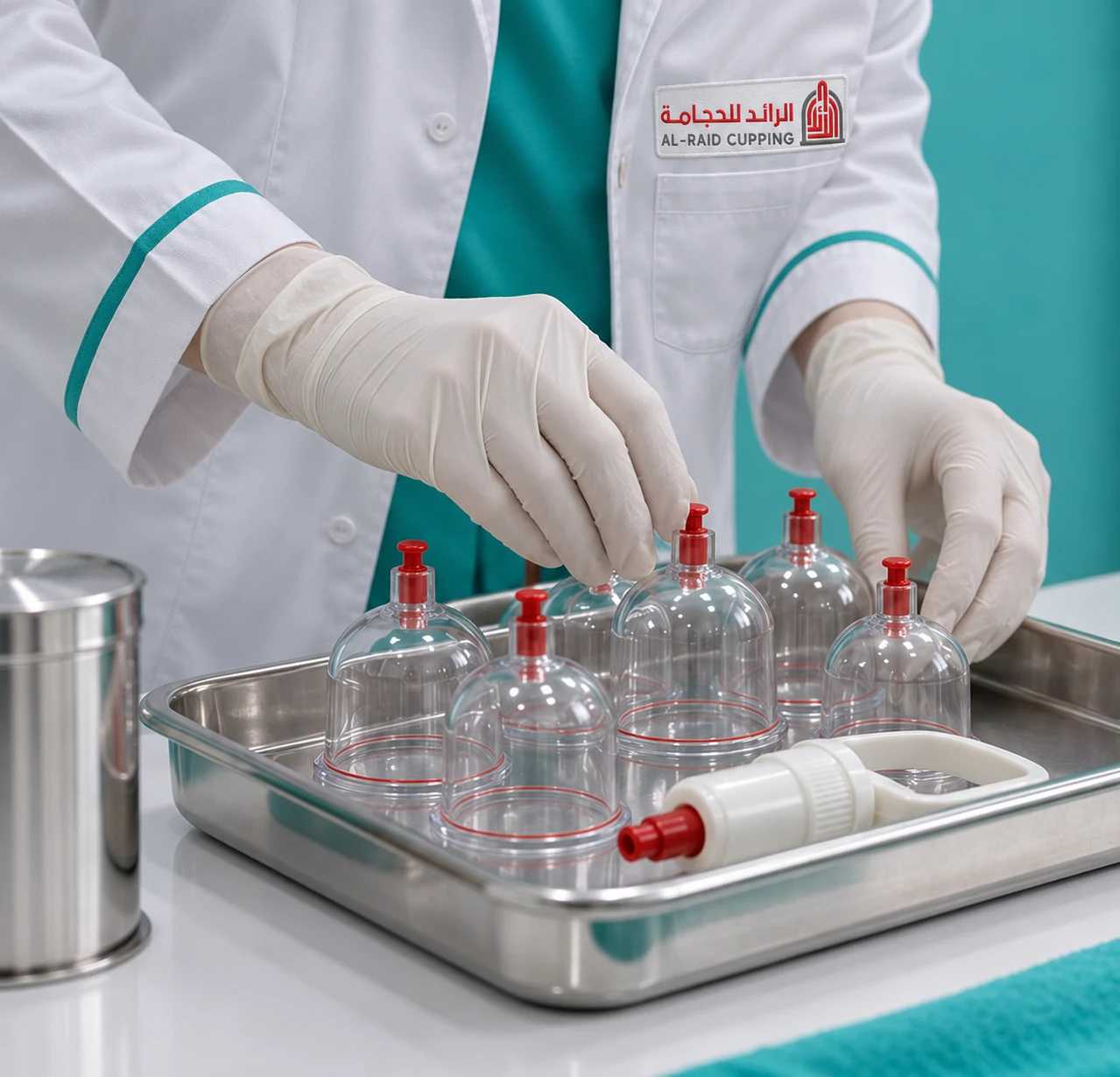
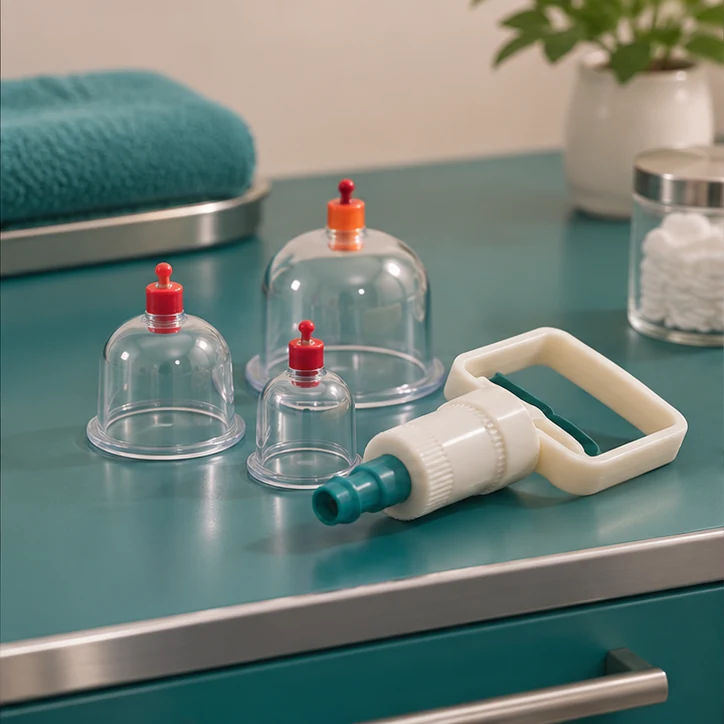
Tell the fertility doctor before booking an additional procedure, especially if you have started medications or have a near appointment for a test or procedure. Tell the doctor which type of cupping you are considering, because the wet type involves scratching the skin and blood coming out, while the dry type relies on suction without intentional scratching. Cupping may cause skin marks, and there are risks of infection or bleeding depending on the procedure and the situation. The doctor assesses whether it is suitable in light of your medications and your plan, instead of you receiving general advice whose details you do not know.
Do not stop a medication, and do not change its dose or timing, to accommodate a session. If one party's instructions conflict with the plan your doctor gave, go back to the doctor who prescribed the treatment. And if you are pregnant or suspect pregnancy, mention that at the consultation before any procedure. When you contact a cupping provider, it is enough in the initial booking message to mention that you want a consultation about suitability. Details of health history and medications can be discussed with the specialist in a way that protects your privacy.
A step you can act on this week
If you are close to an assessment appointment or have passed it, book a fertility consultation and decide who will attend, then gather the results you have instead of repeating all the tests yourself. If you already have a near appointment, prepare three points. The first is how long you have been trying, as you remember it. The second is any health factor or previous treatment worth mentioning. The third is a question about the next step and what it will answer. And when you see an offer for an additional procedure, you can take its name to the appointment and discuss it, instead of having to make a decision at the very moment you read the advertisement.
The impact of waiting varies from person to person. You may prefer to keep the matter between the two of you, or to ask someone you trust for help with arranging the appointment, or to divide tasks so that one of you gathers the results and the other writes down the questions. If talking about delayed conception causes stress, explain that to the doctor as well. It helps to agree before returning from the appointment on when you will review the result, whom to call if it is delayed, and what information is worth waiting for. These are small decisions, but they give you a clear path instead of being pulled between promises that are hard to verify and conflicting recommendations from those around you.
How do you deal with results that gave no clear cause?
The first stage of assessment may end without a direct explanation. Ask the doctor to clarify what the tests have ruled out and what still needs follow-up. Also ask whether repeating a particular test would help, or whether its current results are sufficient to take the next step. If you are offered more than one plan, note the goal, timing, and approximate costs of each option so you can compare them after the appointment. Some questions remaining open does not mean that trying any procedure has become evidence of its benefit, so review the plan with the team who knows your results before arranging additional procedures.
Sources
Frequently asked questions
Does cupping increase the chances of pregnancy?
There is no high-quality clinical evidence showing that it increases the chance of pregnancy or live birth. Ask a fertility doctor about the appropriate assessment and its timing.
Can cupping be done during pregnancy?
If you are pregnant or may be pregnant, mention this to the doctor before booking any procedure. It cannot be assumed that cupping is suitable during pregnancy, whether dry or wet.
Does cupping help with polycystic ovary syndrome?
There is no strong evidence that it treats polycystic ovary syndrome or corrects ovulation disorder. Discuss the diagnosis and plan with your doctor.